
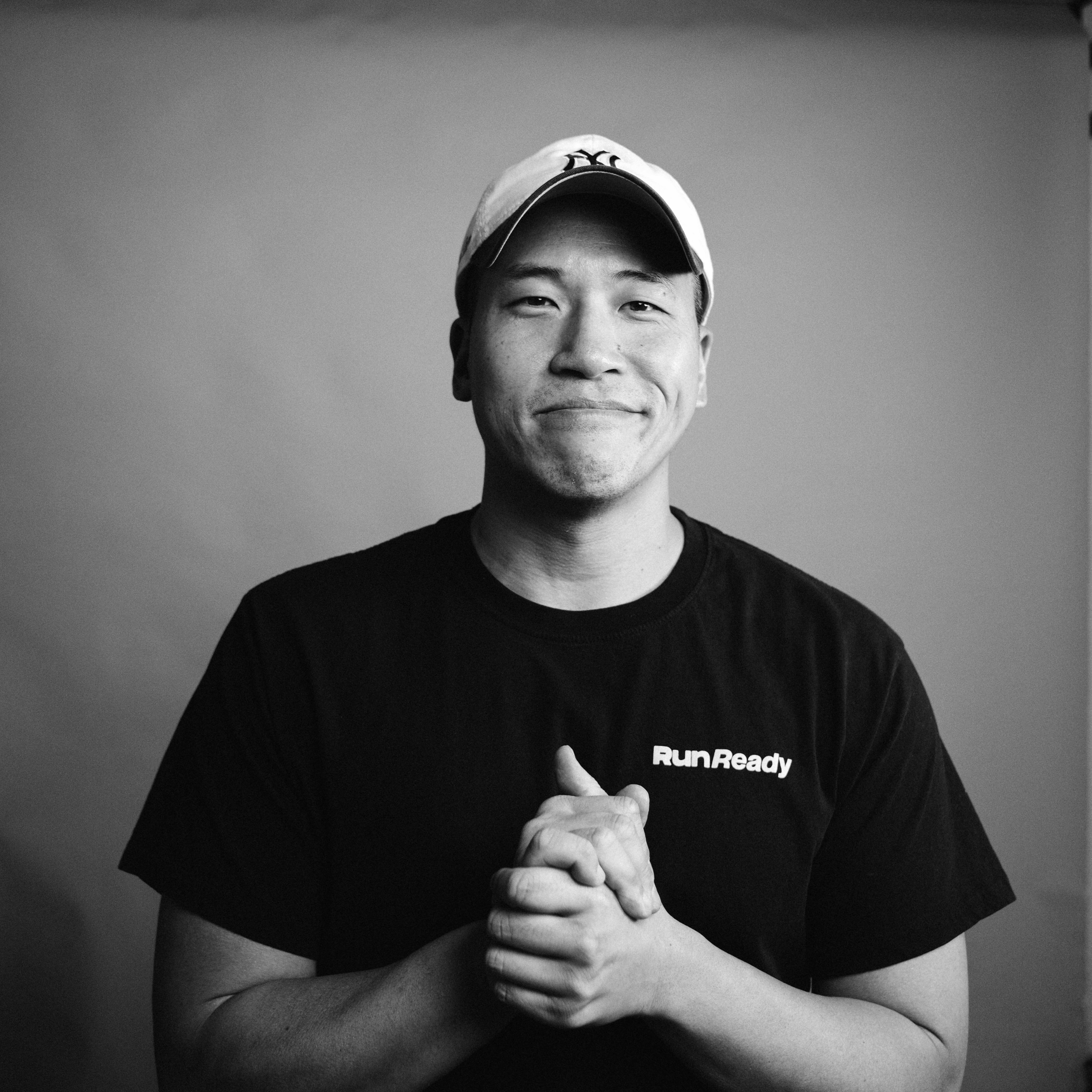
 Nick Lo
What makes trails different is that every step asks your body to solve a slightly different movement problem. You have to control movement, stay balanced, manage load, and quickly adapt to changing terrain. When your body struggles to do those things, you spend more energy reacting to the trail instead of moving through it. That's often why trail running feels harder than the pace suggests.
Here are five things your body is constantly working to handle on the trail, and why they matter.
Controlling Movement When The Ground Changes
One of the biggest differences between road and trail running is that the ground is rarely the same from one step to the next. Your foot might land on packed dirt, loose gravel, a rock, or a tree root, each requiring your body to react differently.
Runners who struggle here often become more cautious with their foot placement. Instead of moving naturally through the trail, they spend more time reacting to it. They slow down, hesitate before landing, or constantly look for the "perfect" place to put their foot. Those adjustments may seem small, but repeated over the course of a run, they require a surprising amount of extra effort.
This usually comes back to Absorb.
Absorb is your body's ability to take in and manage force. On trails, that doesn't just mean handling impact straight up and down. It also means managing force from different angles and directions as the terrain changes. When your body can't do that efficiently, it often stiffens to protect itself or collapses to find movement. Neither approach is particularly efficient, and both make the trail feel more demanding than it needs to.
Runners who handle this well don't need perfect footing every time. Their body is better prepared to accept small variations in the terrain while staying in control.
Staying In Position Instead Of Drifting
Once your body has taken in force, it also needs to stay in position over it. On trails, that becomes much harder because the ground is constantly changing underneath you. As your body adjusts to different surfaces and foot placements, the hips, knees, and torso all need to stay aligned to keep movement controlled.
When that doesn't happen, runners often begin drifting out of position. The hips may shift, the knees may move inward, or the torso may move farther away from the body's centre of mass. These changes are usually subtle at first, but over the course of a run they create extra work because the body has to keep correcting itself to stay balanced.
This is largely a Stability challenge.
Stability helps your body stay controlled even though the ground underneath you keeps changing. Instead of spending energy recovering from every landing, runners with good Stability can stay more balanced and continue moving with confidence.
Moving Through Uneven Positions
Trail running also places your body in positions that road running rarely does. The ankle may need to move further inward or outward depending on the terrain, while the hip often needs to rotate more or stabilize through less familiar ranges of motion. When runners don't have access to those positions, or can't control them under load, movement becomes more cautious and less efficient.
This is where Absorb and Stability begin working together. Absorb helps your body manage force even when every landing is different, while Stability helps control those positions so you can keep moving without unnecessary compensation. When either of those systems is limited, runners often slow down through technical sections, hesitate before landing, or compensate somewhere else in the body.
Runners who move well through uneven positions don't necessarily have perfect footing. Their body is simply better prepared to adapt to the constant variation that trails demand.
Supporting The Body Under Load
Every step on the trail places load through your body, but how that load is shared makes a big difference over the course of a run. When your body isn't sharing that load well, one area often begins carrying more of the work than it should. The calves may start working overtime, the knees may absorb more impact, or the hips may struggle to keep up with the constant changes in terrain.
This usually isn't because one muscle is weak. More often, it's because your body isn't distributing force effectively. When Absorb is limited or poorly timed, force becomes concentrated instead of shared. Rather than spreading the workload across multiple joints and muscles, the same areas repeatedly take on more stress than they should.
Over time, that extra work leads to earlier fatigue and makes maintaining pace feel much harder. Runners who share load well spread force more evenly throughout the body, allowing them to sustain their effort without one area breaking down long before the others.
Handling Repeated Changes Over Time
Trail running doesn't challenge these movement demands once or twice. It repeats them thousands of times over the course of a run. Even small inefficiencies that seem insignificant early on can become much more noticeable as the distance builds.
Runners who struggle often feel comfortable at the beginning of a run, but gradually notice themselves slowing down, making larger adjustments, and working harder just to stay in control. This becomes even more noticeable during longer trail runs or ultra-distance events, where those small inefficiencies are repeated for hours.
This is where Absorb, Bounce, and Stability all need to work together. If one part of the system contributes less, the others have to make up for it, making movement progressively less efficient. Runners who maintain their movement quality deeper into a run often aren't working harder. They're simply spending less energy compensating for the constant changes in terrain.
How A RunReady Assessment Help Runners Handle Trails Better
At RunReady, we start by looking at how a runner takes in and redistributes force.
The first focus is usually Absorb. Can the foot, ankle, hip, and pelvis move in different directions with enough strength and control to handle changing terrain? From there, we look at Stability. Can those positions be controlled as the ground, slope, and foot placement constantly change?
Once those pieces are working well together, we look at Bounce. How efficiently can the body transition from landing into push-off without losing energy?
The goal isn't to make trail running easier by avoiding technical terrain. It's to help runners build a body that's better prepared to adapt to it.
Written By
Nick Lo
Nick has been a physiotherapist since 2011 and co-founded RunReady to help runners move more efficiently. He developed the principles and assessment system that guide our approach, showing you how form impacts performance, where inefficiencies show up, and what to adjust to run better and lower injury risk.