 Ehren Chang
But your body doesn't experience a faster run the same way it experiences an easy one.
You might be able to run faster for a few kilometres but struggle to hold that speed. Or your watch might still show that you're maintaining it while your calves, hips or the way you run starts to change.
That's why getting faster isn't only about how fast you can run. Understanding how your body responds can tell you a lot about what you're ready for and what may need more work.
What Changes When You Run Faster
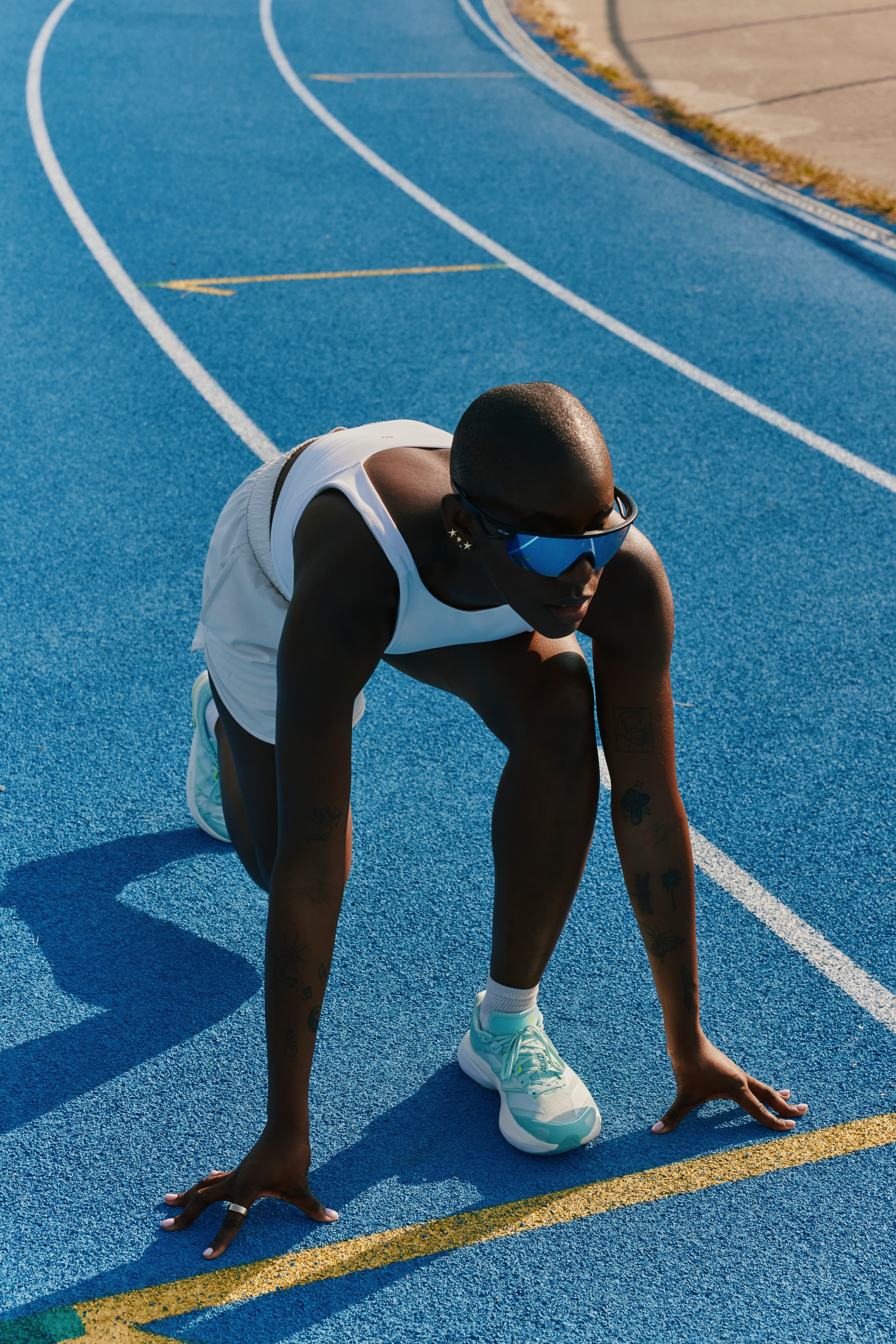
Running faster isn't just about pushing harder with all your muscles and joints. How you run changes, and so does what your body uses to run faster.
As you speed up, your step length, or the distance you cover with each step, increases. Your step frequency also increases, the amount of time your foot spends on the ground decreases, and your foot strike shifts more towards the forefoot or toes.
The muscles and joints contributing to that faster running change too. At slow to moderate speeds, the ankles and calves are the most dominant propulsive force, helping your body move forward by increasing step length. As you run faster, the contribution from your ankles and calves begins to plateau while the contribution from your hips and glutes increases. [1][2]
At sprinting speeds, your hips and glutes become the most dominant propulsive force, helping to increase step frequency as step length begins to plateau. [1]
Why You Can Run Faster but Struggle to Hold It
One reason is muscle endurance. Running at higher speeds places greater demands on different muscles, and those muscles may not yet have the endurance to keep working that way for a longer period of time.
There's also a skill component. Because faster running requires different mechanics than slower running, it is, in its own way, a separate skill. Like learning any new skill, practice is required to become more efficient and consistent.
Think about shooting a basketball. No one expects to be perfect right away without practice. Maintaining faster running isn't all that different.
What Can Change Before You Slow Down
You don't necessarily have to slow down for your body to start showing signs that maintaining that speed is becoming more difficult.
You may start feeling more work, pain or strain in the muscles involved in faster running. This primarily includes the muscles along the backside of your legs, often called the posterior chain: your glutes, hamstrings and calves.
Signs of fatigue can also begin to appear, such as an increase in heart rate or heavier breathing. And the way you run may start shifting back towards how you move at slower speeds. Your cadence, or the number of steps you take per minute, may decrease, for example, or your step length may begin to shorten.
Where you start struggling can tell you something too.
If your calves feel like they're giving out during faster running, it could mean you're not engaging your hips and glutes very well because of a poor mind-muscle connection with that area. If your glutes are giving out, they may need more strengthening to tolerate the speeds you're running at.
If you notice a big jump in your heart rate and breathing rate, it could suggest that your cardiovascular system isn't quite ready for that amount of speed yet. Breaking the run into smaller intervals or slowing down may help.
If your running mechanics start breaking down, muscle fatigue may be involved, but it can also suggest that you need more practice maintaining the technique required for faster running.
How Do You Know When You're Ready for More?
At RunReady, one thing we look at is whether you have sufficient strength and mobility in Bounce, which is how your body produces and returns force to help move you forward. A strong heel raise and hip extension are two ways this can be demonstrated.
Having a good foundation of slower running matters too. Faster running is more challenging, so it's important to have practised the basics of running before taking on a type of running that requires new technique.
And sometimes you don't know until you try. You may attempt a certain speed or duration and find that you can't maintain it yet. The important thing is to reflect on what happened and adjust your target speed or duration as needed.
A thorough movement assessment can help identify your capacity to Bounce and help determine whether you're ready to increase your speed. Strengthening the muscles that are particularly important during faster running—including your glutes, hamstrings and calves—can also help prepare your body for those demands.
Your targets can change during training too. If signs of fatigue start appearing, reducing your target speed or shortening your intervals can help mitigate the risk of injury.
Footwear can also play a role. Shoes with more Bounce can assist your body when training at faster speeds, especially through fatigue. They're a tool you can use to your advantage, but they don't completely replace the need to strengthen and improve your technique.
The Checkpoint
Your watch can tell you how fast you ran. It can't tell you the whole story of how your body got you there.
What changes when you pick up the pace, what starts working harder, and what happens as you try to hold that speed can all give you useful information.
Understanding those changes gives you more than another split to chase. It can help you understand what your body already does well, what may be limiting you, and what to work on as you get faster.
References
[1] Schache, A. G., et al. “Modulation of work and power by the human lower-limb joints with increasing steady-state locomotion speed.” Journal of Experimental Biology, vol. 218, 2015, pp. 2472–2485.
[2] Willer, J., Allen, S. J., Burden, R. J., & Folland, J. P. “How Humans Run Faster: The Neuromechanical Contributions of Functional Muscle Groups to Running at Different Speeds.” Scandinavian Journal of Medicine & Science in Sports, vol. 34, no. 8, 2024, e14690.
Written By
Ehren Chang
Ehren is a physiotherapist at RunReady with a background in kinesiology, strength and conditioning, and running movement analysis. He works with runners to better understand how their body responds to training load and fatigue.