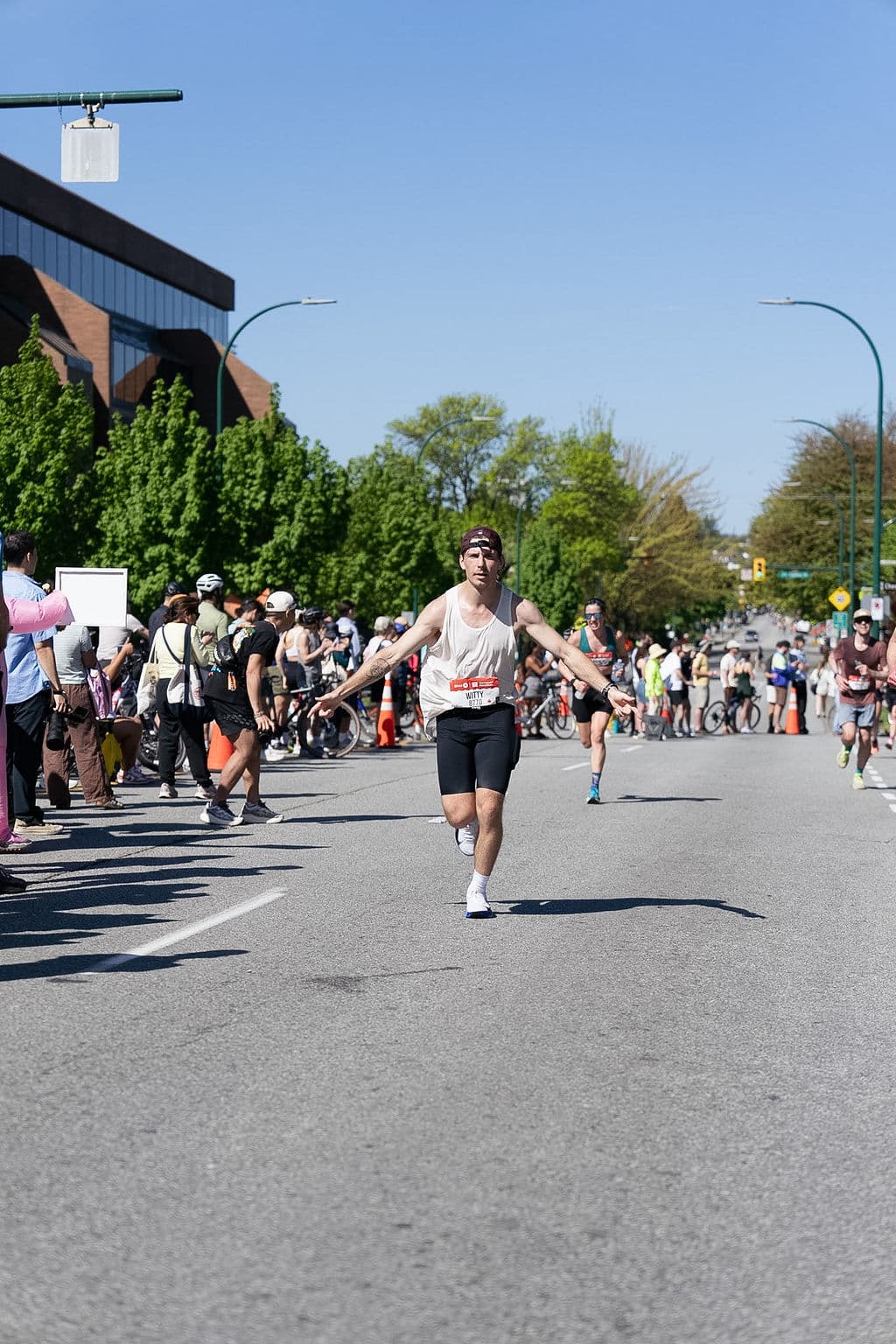
 Ehren Chang
When training with a finishing time in mind, runners will often incorporate an element of speed into their training. This may take the form of tempo runs, speedwork, or interval training.
While running fast is exciting, jumping into faster and more challenging workouts without first building a solid foundation and understanding the demands of speed can be a recipe for disaster. It doesn’t take long during a fast run to feel how difficult it is to maintain quick turnover, how much harder certain muscles need to work, and how much impact the body experiences with each stride.
Let’s break down what actually happens when we pick up the pace and what we need to do to minimize our risk of injury during faster runs.
What Changes When You Pick Up the Pace
Our running mechanics shift as pace increases. Contrary to what happens over the course of a long run, cadence increases¹² and ground contact time decreases². These changes are intuitive. In order to run faster, we need to cycle our legs quicker and spend less time on the ground.
Maximal joint angles in hip extension, hip flexion, and knee flexion increase¹. This reflects how we need to move our bodies more dynamically at higher speeds, particularly during the takeoff and swing phases when we extend through our hips and lift our legs to prepare for the next step.
Hip extensor, knee extensor, and ankle extensor torque also increases¹. These are the same motions involved in "triple extension", a necessary component of an effective push-off. Triple extension is the coordinated straightening of the hip, knee, and ankle joints. To push off harder from the ground, these joints need to produce more force.
Stride length and ground reaction forces also increase at higher speeds¹². Because we exert more force through our joints and strike the ground harder, we end up covering more ground with each stride.
How Speed Shows Up
Runners may notice that maintaining cadence and quickness in their steps is more challenging during faster runs. As discussed in previous articles, when fatigue accumulates during longer runs, cadence tends to decrease and ground contact time tends to increase. This directly opposes the demands that speed places on those factors.
Runners may notice that restrictions in mobility limit their ability to run faster. Maximal joint angles are greater at faster paces, meaning more of a runner’s available range of motion is challenged during a fast run.
Runners may notice more fatigue in their glutes, quads, and calves. These muscles are responsible for hip extension, knee extension, and ankle plantarflexion, all of which need to generate more force at higher speeds.
Runners may also notice that running faster feels harder and more impactful on the legs. Greater ground reaction forces mean we are hitting the ground harder with each step than we typically would.
What to Focus on During Faster Runs
Runners should clearly define the objective of their runs and be flexible when adapting workouts if needed. The demands of speed go directly against the body's adaptation to fatigue. Fatigue causes speed to decrease, and forcefully pushing through it can increase the risk of injury. If the objective of the session is to work at a certain speed, do not be afraid to adjust the duration or distance of the workout so you can maintain high-quality running without overdoing it.
Runners should also build a strong foundation through mobility and strength training before tackling faster runs. Running fast places greater mobility and strength demands on the body, particularly with Bounce-related movements. Spending time outside of running to improve hip mobility and posterior chain strength can help set runners up for safer and higher-quality speedwork.
The Check Point
Running fast can be challenging without a solid foundation. Understanding what happens as pace increases is important for injury prevention.
Our running mechanics change as speed picks up. We need to cycle our legs quicker, spend less time on the ground, and produce more force through Bounce.
Be flexible when adapting the duration or distance of faster runs if needed. If the goal is to maintain a certain speed, it is safer to prioritize quality over quantity.
Improving strength and mobility outside of running, especially Bounce-related movements, can improve the quality of faster runs and help reduce injury risk.
Written By
Ehren Chang
Ehren is a physiotherapist at RunReady with a background in kinesiology, strength and conditioning, and running movement analysis. He works with runners to better understand how their body responds to training load and fatigue.